
Written in Cusco by the people who run the trips.
Most travel sites answer this question in one of two ways. The booking platforms say travellers with limited mobility should not take part. The tour operators say it is easier than you think, and leave it there.
Neither is useful. Here is what actually happens on the ground, including the parts we have not done yet.
Circuit 3, and why it is the right one
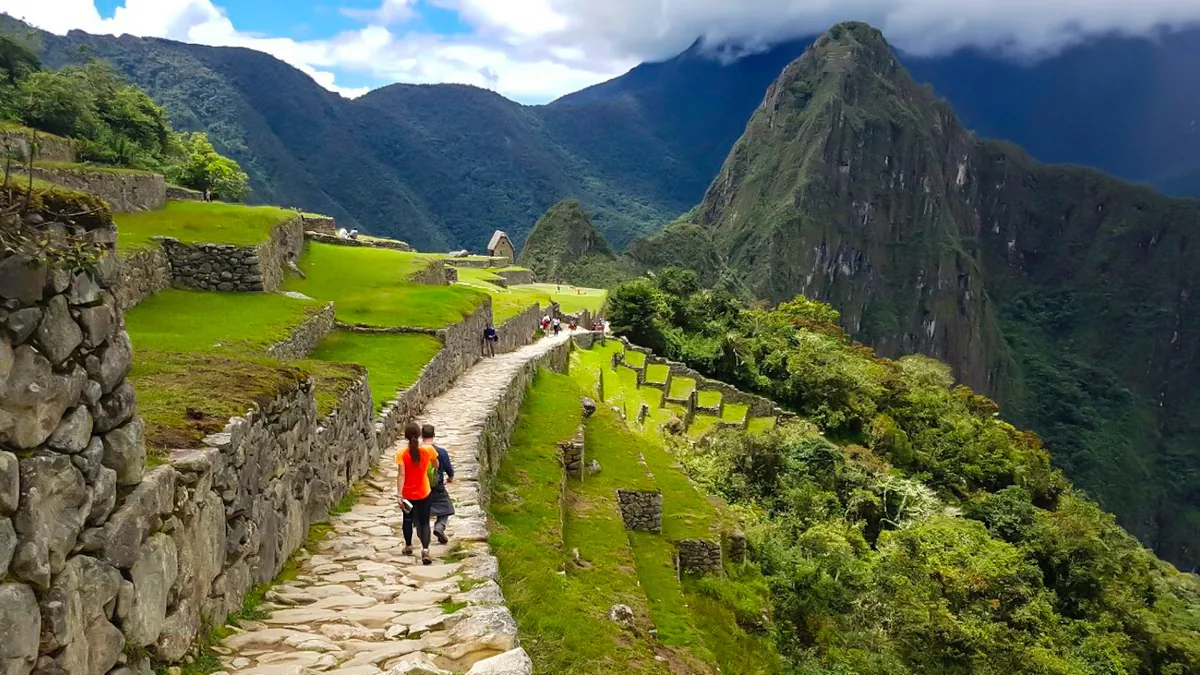
Machu Picchu is visited on fixed circuits. For a traveller who cannot manage stairs, we book Circuit 3, the lower route. It was designed as the royal sector and it stays on the lower terraces.
It is not flat. There are around fifteen steps, and this is the part worth understanding: they are not one long staircase. They are short drops, a few steps at a time, spread along the way down to the lower section. That is manageable at a slow pace — but you need someone with you. There are points where a hand is necessary, and we say so plainly rather than let anyone discover it up there.
There are toilets at the entrance, and one inside the site.
What you give up: the classic postcard view belongs to the upper circuits. Circuit 3 gives you the royal sector, the stonework up close, and the valley below. It is a different visit, not a lesser one. Anyone who tells you there is no difference is selling you something.
Trains and buses: what we do, and what nobody can fix
Neither the trains nor the buses to Machu Picchu have spaces designed for wheelchairs. That is the honest situation, and no operator can change it.
What we can do, we do. As soon as a booking is confirmed, we write to both the rail and the bus company stating that this traveller needs to board first and needs staff on hand to help. It is granted. But a confirmation email is not a plan, so we never rely on it alone: a private guide travels with you from your hotel, through the station, onto the train, up to the site and back to your room at the end of the day. He knows where the tickets are checked, where the queues form and who to speak to. That private guide is quoted separately, whatever tier you travel in.
Years ago, before I had my own company, I was hired to accompany a traveller with limited mobility. By early afternoon he had had enough — not of the place, of the discomfort — and his train was hours away. I spent that afternoon at the station getting him onto an earlier one. He got back to his hotel and rested. That is the kind of thing that is decided on the day, by someone standing there.
Wheelchairs: what we know and what we have not done
You can enter with a wheelchair. It is not a bureaucratic ordeal: the special-conditions request is made when the booking is placed, and the access comes through with your entrance ticket.
We have the protocol in place. We have not yet operated this trip ourselves. If you are the first, you should know that before you choose us, not after. What we do have is the arrangement with the hotels, the trains and the guides, and we would plan it with that in mind.
Why we start in the Sacred Valley, not in Cusco
This is the decision that makes the difference, and almost nobody gets it right.
Cusco sits higher, and it is a working city: traffic, noise, steep streets, crowds. Arriving there straight from the airport and walking around the same afternoon is how a good trip turns difficult.
We go from the airport to the Sacred Valley, which is lower, flatter and calm.
- Day 1 — arrive and go straight to the Valley. Rest.
- Day 2 — nothing. A free day. This is the whole point.
- Day 3 — the Sacred Valley at a gentle pace, and on to Machu Picchu.
Two nights before you go up. Stay longer if you want to; many people do.
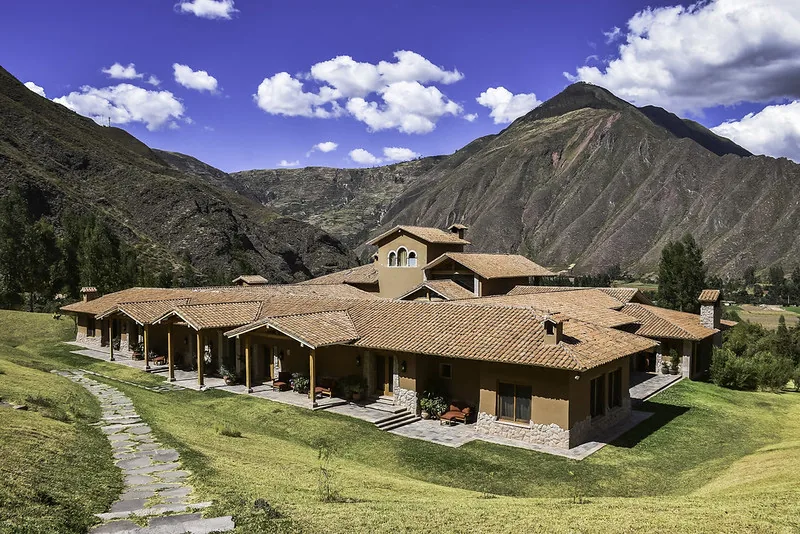
The hotels there are the best in the region, and most of them are not buildings with corridors — they are small casitas spread across flat ground. That matters. We ask for a room close to reception and the dining room, so nobody walks further than necessary, and we check wheelchair access before confirming, because not every hotel has it.
The Valley also has what you want in the background and never want to use: the hotels keep oxygen, there is a clinic in Urubamba, and we carry an oxygen cylinder in the vehicle for the whole trip.
The days in between
For travellers in their seventies, we do not fill the free days with activity. We leave them open: the spa at your hotel, or one at another hotel nearby that we book for you, a slow morning, a short walk, lunch somewhere with no rush.
And once you are rested and used to the altitude, Cusco is a pleasure rather than an effort. That is the right order: the Valley first, Machu Picchu next, the city last.
Before you travel, we ask a lot of questions
For older travellers we go through every detail — how you walk, how you sleep, what you take, what worries you — and that information goes to the hotels, the drivers, the guides, the train and the bus company before you arrive. Not so we have a file. So that everyone who meets you already knows how to look after you.
In fifteen years we have never had to cancel a trip for a traveller because of this. The planning is why.
Where this fits
A trip built this way is not something you buy off a page. It is planned around you, and that is how we do these.
The closest starting point is our 10-Day Peru Tour: Colca Canyon, Lake Titicaca & Machu Picchu. It moves slowly, and the train between Puno and Cusco is a comfortable day rather than a hard one. One warning: Lake Titicaca is higher and colder than Cusco, so it suits travellers who are rested by then, and we say so when we think it is not for them.
From there we change what needs changing — the order, the nights, the pace — or we start from nothing: Amazon first, or Arequipa, or Machu Picchu and nothing else. Tell us your age, how you move and what you want to see.
Tell us what you can and cannot do. We will tell you honestly what is possible.